The horsebox at the opening of "The Man From Snowy River" (VSPY 7?) was one of my first prompters to model Victorian Railways. As such, I was quite excited when Steam Era announced the FF. A challenging and intricate kit, the FF nonetheless repays with a very nice rendition of this quite individual prototype. Purchasing the early version has meant era-specific changes were minimal, and because this batch were new during the middle of my era I have kept weathering to a minimum.
FF Bogie Horsebox
The horsebox at the opening of "The Man From Snowy River" (VSPY 7?) was one of my first prompters to model Victorian Railways. As such, I was quite excited when Steam Era announced the FF. A challenging and intricate kit, the FF nonetheless repays with a very nice rendition of this quite individual prototype. Purchasing the early version has meant era-specific changes were minimal, and because this batch were new during the middle of my era I have kept weathering to a minimum.
BW 2nd Class Coach
I have finally got around to building one of Steam Era's W coaches, this one a BW. This is an interesting kit that goes together nicely, and I think the use of nylon thread for chassis bracing is ingenious and works very well. Changes for Glenburn's era weren't too significant - I scribed in the mirror surrounds above the windows, added buffing plates and supports and screw link couplers. The handbrakes weren't fitted until later so I left these out. One change I didn't make was to remove the anti-collision posts at each end as these are near-hidden by the corridor connection, and I would likely make more mess than benefit trying to remove them. The only other change is positioning and type of lettering.
IZ Open Wagon
The IZ is about as modern as 4 wheel wagons will get on "Glenburn", having been introduced towards the end of the era being modelled. Steam Era's model has plenty of detail which comes up nicely on the finished product. Era specific adds are visible in the pre-painting shot include extra handrails, buffers, a stirrup step and, as the IZ was modern in this era, it appears they were delivered with the then new buckeye coupling and so had the transition 3 link in place. As such I have replicated this with the scratchbuilt workable transition coupling by mounting a 3 link on the buckeye.
Z Van (ex D van)
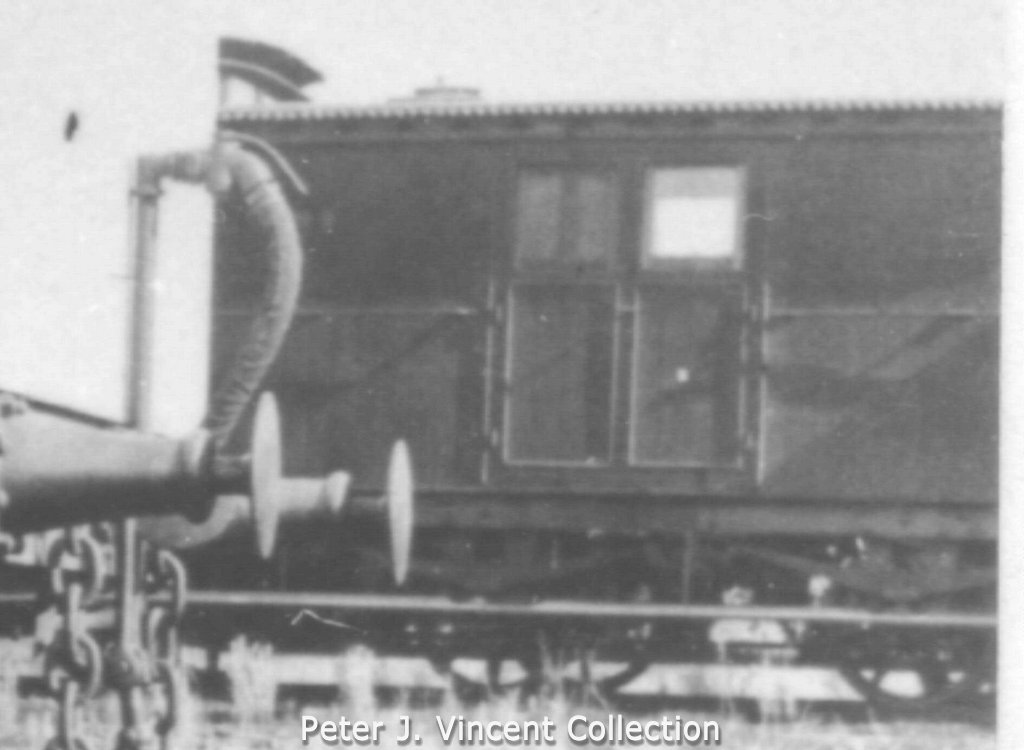
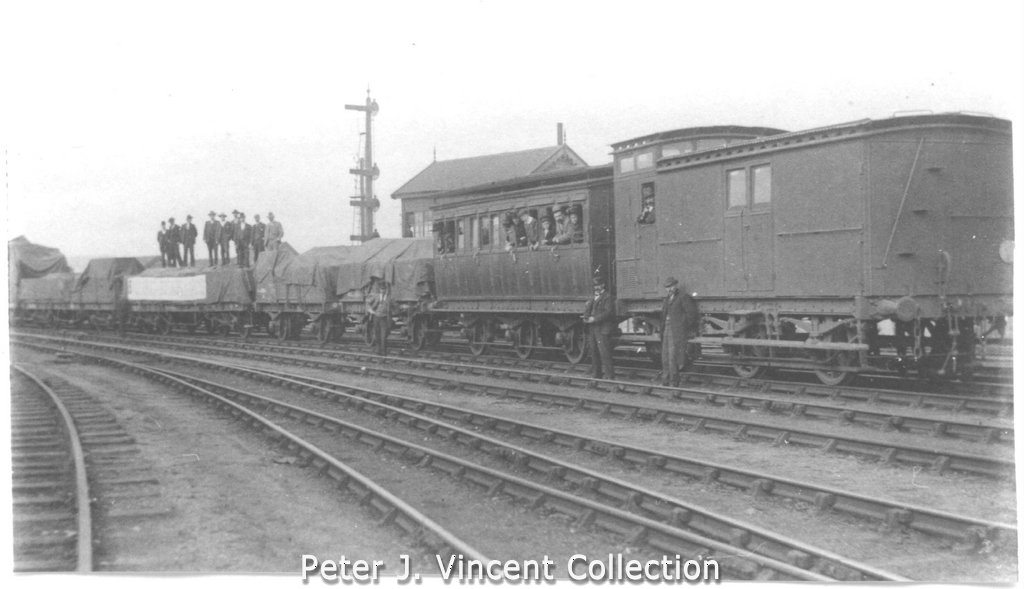
This Z's a bit different from the "standard" model. Peter J Vincents' excellent picture collection shows two D/Z vans with strapping and seemingly less prominent vertical boards than the later type:
http://www.pjv101.net/fts/u01/au431.jpg - on the centre doors
http://www.pjv101.net/fts/u01/au525.jpg - on the ends, around the doors and perhaps above the dogbox at the other end
I haven't been able to verify whether these features were part of the early Z vans prior to the more plain vertical board style becoming dominant, or whether the strapping is the remains of these vans being rebuilt from earlier strapped D vans. PJV's rollingstock records show some of the D vans with plain board siding and outside strapping do not appear to have been rebuilt, however were fitted with Westinghouse braking and lasted (some for quite a few years) into Glenburn's Era.
To try and build one of these earlier Z vans, I started by trying to sand down as much of the board detail as possible, which of course removed all other detail so items like the steps and lamp brackets had to be scratchbuilt and re-added. Sadly my pictures of the pre-painting body went to mush, however are included here in case they are useful:
I also have used SEM's split pan chassis on the assumption of a new chassis being added, though admittedly the pictured vans have a slightly different and earlier style that may have lasted until withdrawal. Other differences are the single lower shunters board with just two short boards adjacent to the doors on each side, some different handrail lengths and positions, and the double roof. Detail work is a mixture of styrene and card (corrugated roof).
The model is based on van 41Z that was scrapped in January 1926.
This model has necessarily been based on conjecture from the information I have at hand and I welcome input as to correctness and/or other origins of the vans in the pictures. The "Brief History" authors noted a future work covering vans which I look forward to hopefully finding out whether I'm miles off track or closer to the truth.
http://www.pjv101.net/fts/u01/au431.jpg - on the centre doors
http://www.pjv101.net/fts/u01/au525.jpg - on the ends, around the doors and perhaps above the dogbox at the other end
I haven't been able to verify whether these features were part of the early Z vans prior to the more plain vertical board style becoming dominant, or whether the strapping is the remains of these vans being rebuilt from earlier strapped D vans. PJV's rollingstock records show some of the D vans with plain board siding and outside strapping do not appear to have been rebuilt, however were fitted with Westinghouse braking and lasted (some for quite a few years) into Glenburn's Era.
To try and build one of these earlier Z vans, I started by trying to sand down as much of the board detail as possible, which of course removed all other detail so items like the steps and lamp brackets had to be scratchbuilt and re-added. Sadly my pictures of the pre-painting body went to mush, however are included here in case they are useful:
I also have used SEM's split pan chassis on the assumption of a new chassis being added, though admittedly the pictured vans have a slightly different and earlier style that may have lasted until withdrawal. Other differences are the single lower shunters board with just two short boards adjacent to the doors on each side, some different handrail lengths and positions, and the double roof. Detail work is a mixture of styrene and card (corrugated roof).
The model is based on van 41Z that was scrapped in January 1926.
This model has necessarily been based on conjecture from the information I have at hand and I welcome input as to correctness and/or other origins of the vans in the pictures. The "Brief History" authors noted a future work covering vans which I look forward to hopefully finding out whether I'm miles off track or closer to the truth.
V Class
I converted the Roundhouse 2-8-0 into a VR V Class, the last members of which were just hanging on into Glenburn's era. I walked through the conversion process in the VR Enthusiast Forum. If you want to know more on how it went and the changes made it can be found here:
http://www.vr-enthusiast.com/forum/viewtopic.php?f=8&t=475
Nb. You don't need to be a member of VRE to read this, but will need to join if you want to comment.
I have taken some pictures of the V in service on the "Latest Updates" page:
http://vrlatestupdates.blogspot.com.au/
Here's an overview of the changes made in comparison with the original RTR model.
WT Water Tank
OH Tool Van
This model is of a van that may not have existed. Phil Dunn kindly supplied a 1920 General Arrangement detailing conversion of one of the old style K flat wagons into a Tool Van for one of the overhead trains via adding a box body, peaked roof and working platform. For night work, the plan has an acetylene powered lamp included - hence the small tank on one end, and pipework. This looks convoluted as the lamp is folded down for transit (as is the end roof platform extension). The G.A. was for the conversion of K157 - Peter J Vincent's very helpful records show this K as having been converted to a water tanker or like, however later K's of the same time may have had these changes done, they are listed by PJV as have been converted to Overhead use. So, it may be a "what if" or a prototype model.
The model is built up in bass wood with SEM W irons/axleboxes, wheels (mounted in MJT fold up axleholders given the unusual chassis length), buffers and cut down brake lever workings. Other details are made up from the scrap box.
6 wheel U van
Further to my earlier entry on "Glenburn" U vans, I have recently followed David Foulke's October 1989 AMRM article to produce a much more accurate 6 wheel van than my first attempt. I cheated with styrene modifications for the ends rather than the cut/shut recommended given I had to backdate the ends in any case. I also referenced Philip Dunn's April 2000 AMRM article on the U vans. Wheels are mounted in MJT fold-ups, with Steam Era W iron/axlebox/spring fascias from the new 10'6" chassis kit mounted on a styrene I channel solebar. On SEM's seperate recommendation, I use a Code 88 wheel for the centre wheel and this has worked very well. Decal is from "Signs of All Kinds", cut up to word size and louvre size to help bed it down. Not perfect, but the best I have done with these to date. This van's painting was different each side as shown.
M Livestock Wagon (Early wood/steel)
For my first M wagon I tackled one of the mysterious open topped M's. The picture at the top is the only one I have ever seen of these (please let me know if you have seen another!), and Peter J Vincent's site shows them as running largely unmodified until their demise in the late 1920s/early 1930s. Perhaps as they were a small class, they missed the photo limelight. As such I have had to build the ends and top speculatively, and based on the other wooden M's, which may be close. Similarly the roof walks are speculation as they appear to be there, however there is no sign visible of how one would get to the roof! Also, I have left her unroofed, though it is hard to believe they were'nt modified in this way at some stage in their relatively long life. I built the model from wood as it was all I had to hand, wood is great to work with, however, I will be usuing styrene for my next "wooden" M to get the detail crisper. I added representative bolts rather than every one, a close look will show the prototype is prickling with bolts! She is mounted on Steam Era's great new short chassis. My thanks to Philip Dunn for helping with rare details of these wagons.
QR Bogie Open
I backdated Steam Era's superb QR wagons to an earlier (not earliest) version via replacement of end bracing, addition of wooden buffer beams, truss rods and the usual buffers/couplings/hoses. QR's were still essential for regular general goods traffic in the period modelled so she's carrying a tarped load. My thanks to Philip Dunn for information regarding the earlier version. Wonderful kit, well done SEM!
Electric Loco - Steeple Cab
I have recently completed scratchbuilding one of VR's pioneering Steeple Cab electric locos. Loco is powered by twin Steam Era Models' Beetles electrically linked as suggested by David Foulkes (and detailed by him in AMRM) via phosphor strips and contacts as shown in the picture above. Chassis plate is from Hollywood Foundry, with the body seperately being built up in layered styrene. The pictures above show the main stages in the progression of the build, from the couple o' Beetles and Hollywood board, through the basic under-body in thick styrene with the Steam Era bogie sides added, through weighting (important for traction and prototype performance) and laminating the outer body layers to form the basic body to detailing, painting and completion.
Pictures of her in service on "Glenburn" are at:
Subscribe to:
Posts (Atom)